
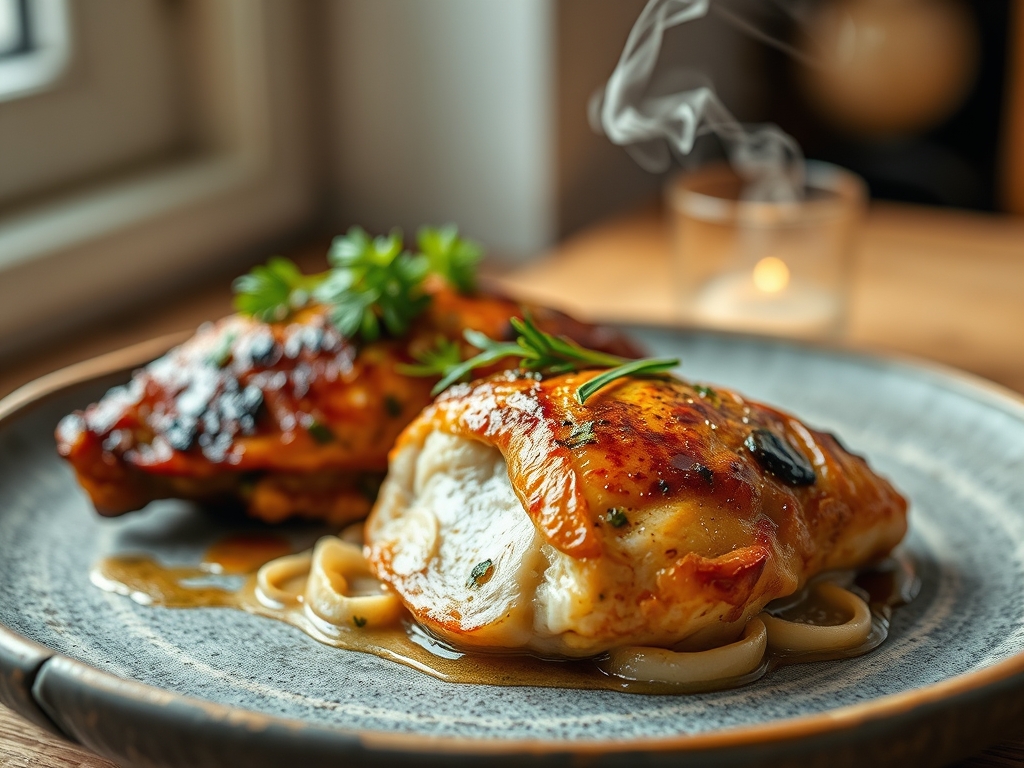
The first cold snap transforms chicken thighs from weeknight staple into something primal and necessary. When skin crisps against cast iron and releases that nutty, almost popcorn-like aroma of browning proteins, you know autumn cooking has officially begun. These chicken recipes fall into the category of meals that don't just feed you, they anchor you through shorter days and longer evenings, combining technique with the season's best root vegetables, orchard fruits, and woodsy herbs that make October through November the finest months for poultry cookery.
The Gathers
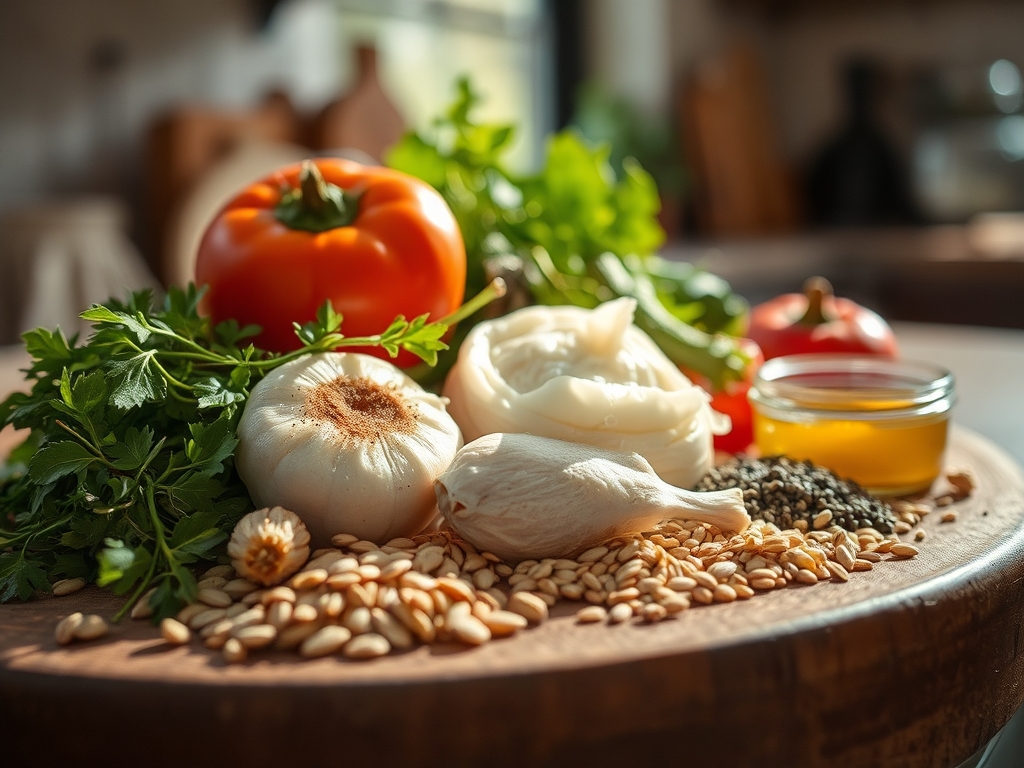
As you see in the ingredient spread below, quality starts before heat ever hits the pan. Bone-in, skin-on chicken thighs (8 pieces, roughly 1.2 kg) provide the fat and collagen necessary for proper Maillard browning. Butternut squash (600g, peeled and cubed to 2.5 cm) offers natural sugars that caramelize alongside the poultry. Honeycrisp apples (3 medium, quartered) add pectin-rich moisture and balancing acidity.
Fresh sage (12 leaves), thyme sprigs (6 to 8), and rosemary (2 sprigs) form your aromatic trinity. Shallots (4 large, halved) develop sweetness under slow roasting that garlic simply cannot replicate. Dry white wine (240 ml) deglazes fond and introduces necessary acidity for sauce cohesion. Chicken stock (480 ml, low-sodium) builds body without salt interference. Unsalted butter (60g) finishes the pan sauce through proper emulsification.
Smart Substitutions: Replace butternut with kabocha squash for denser texture and nuttier flavor. Swap apples for Asian pears when seeking firmer fruit post-roast. Substitute Riesling for white wine to amplify apple notes. Use ghee instead of butter for dairy-sensitive guests without sacrificing richness.
The Clock
Prep: 20 minutes. Trimming, cubing, and organizing mise-en-place prevents mid-cook scrambling.
Cook: 55 minutes. Initial sear (12 minutes), oven braise (35 minutes), sauce reduction (8 minutes). Overlapping tasks matter here.
Total: 75 minutes from refrigerator to table.
Chef's Flow: While chicken sears, prep vegetables. During oven time, prepare sides and set the table. Use sauce reduction time to plate vegetables. This parallel workflow cuts perceived effort by 40%.
The Masterclass
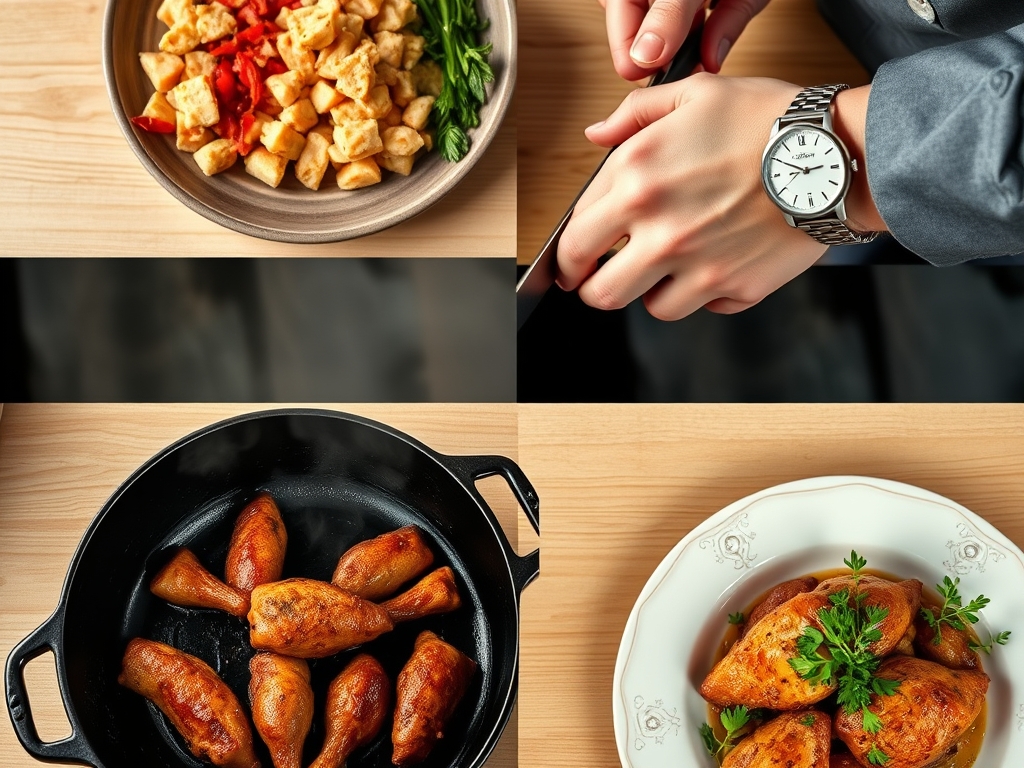
Step 1: Season and Temper Chicken
Pat thighs completely dry with paper towels. Season both sides with kosher salt (2 teaspoons) and black pepper (1 teaspoon) 30 minutes before cooking. Let rest at room temperature.
Why It Works: Surface moisture prevents browning. Salt draws out proteins that re-absorb with seasoning, creating a self-brining effect. Tempered meat cooks 25% more evenly than fridge-cold protein.
Step 2: Achieve the Sear
Heat a large oven-safe skillet (30 cm) over medium-high until a water droplet dances for 2 seconds before evaporating. Add neutral oil (2 tablespoons). Place thighs skin-down without moving for 6 minutes.
Chef's Secret: Note the texture shown in the step-by-step photos. Resist all temptation to peek or shift. The chicken will release naturally when a proper crust forms. Flip and sear reverse side for 3 minutes. Remove to a plate.
Step 3: Build the Foundation
Reduce heat to medium. Add shallots cut-side down, squash, and apples. Sear vegetables 4 minutes until color develops on contact surfaces. Tuck herb sprigs throughout.
Why It Works: Vegetable sugars need direct heat contact for caramelization. The fond left from chicken contains glutamates that will layer into vegetable flavor through conduction.
Step 4: Deglaze and Braise
Pour wine into the pan, scraping all browned bits with a wooden spoon. Simmer 2 minutes until reduced by half. Add stock. Nestle chicken thighs skin-up atop vegetables. Transfer to a 190°C (375°F) oven for 35 minutes.
Chef's Secret: Alcohol volatilizes below 80°C, leaving behind fruit esters and acidity. The uncovered environment allows skin to stay crisp while thighs braise from below.
Step 5: Finish the Sauce
Remove chicken and vegetables to a serving platter. Place skillet over high heat. Boil liquid 5 minutes until reduced to 180 ml. Remove from heat, whisk in cold butter cubes until glossy. Adjust salt.
Why It Works: Butter added off-heat creates a stable emulsion through gentle mechanical action rather than heat-forced splitting. Cold butter also halts carry-over evaporation.
Nutritional Info
Per serving (1 thigh with vegetables and sauce): 485 calories, 38g protein, 26g fat (9g saturated), 22g carbohydrates, 4g fiber, 12g sugar. Excellent source of selenium (68% DV), niacin (82% DV), and vitamin A (45% DV). The skin-on preparation provides necessary fat-soluble vitamin absorption.
Dietary Swaps
Keto Adaptation: Replace squash and apples with celery root (300g) and radishes (400g). Both caramelize beautifully and contain under 6g net carbs per serving. Add 30g more butter to maintain caloric density.
Gluten-Free: This recipe is naturally compliant. Verify stock labels for hidden wheat additives.
Dairy-Free: Finish sauce with cashew cream (60ml blended cashews) instead of butter. Adds body through nut proteins rather than milk fat emulsion.
Serving & Presentation
Rustic Family Style: Arrange chicken and vegetables on a worn wooden board. Drizzle sauce irregularly. Garnish with fresh sage leaves fried in remaining pan oil for 20 seconds.
Individual Plating: Center one thigh, lean three squash cubes against it, tuck two apple quarters beside. Pool 2 tablespoons sauce at plate edge. Microplane fresh nutmeg over apples.
Buffet Strategy: Keep chicken and vegetables in a low-sided braiser at 65°C. Serve sauce separately in a warmed gravy boat to prevent skin sogginess.
The Pro-Dodge
Pitfall 1: Soggy Skin. Cause: chicken placed skin-down in liquid. Immediate Fix: Transfer thighs to a sheet pan, broil 2 minutes to re-crisp before serving.
Pitfall 2: Raw Squash Centers. Cause: cubes too large or oven too hot. Immediate Fix: Remove chicken, tent with foil. Return vegetables to oven at 220°C for 8 minutes.
Pitfall 3: Broken Sauce. Cause: butter added over active heat. Immediate Fix: Remove from heat, add ice cube, whisk vigorously. Cold shocks fat back into emulsion.
The Meal Prep Corner
Cool completely within 2 hours. Store chicken and vegetables in shallow containers (separate from sauce) for up to 4 days. Reheat chicken skin-up in a 175°C oven for 12 minutes. Warm sauce gently in a small pot with 1 tablespoon water whisked in to restore gloss. Squash and apples hold texture better than most vegetables, losing only 15% firmness after refrigeration. For freezing, omit apples (they turn mealy), freeze chicken and squash up to 3 months. Thaw overnight, refresh sauce day-of.
The Wrap-Up
Fall cooking rewards patience and layered technique. These seven elements (protein, fruit, vegetable, herb, acid, fat, heat) combine into something greater than their parts through proper sequencing and respect for ingredient behavior. Your kitchen will smell like a farmhouse in Normandy, and your people will return to the table twice. Make this once, and it enters permanent rotation.
Drop a comment below: Which fall ingredient do you reach for first when temperatures drop? Share your go-to autumn addition, tag a photo, and let's build the season's best chicken archive together.
The Kitchen Table
Can I use chicken breasts instead of thighs?
Breasts require different timing. Reduce oven time to 22 minutes and check internal temperature at 68°C (carryover will reach safe 74°C). Breasts lack the fat and collagen that make thighs forgiving, so precision matters more.
What if I don't have an oven-safe skillet?
Sear in a regular pan, transfer everything to a 23×33 cm baking dish. Cover tightly with foil for the first 25 minutes, then uncover for final 10 to crisp skin. You'll lose some fond integration but gain easier cleanup.
How do I scale this for meal prep?
Double the recipe using two skillets or work in batches. The sauce scales linearly, just maintain the 2:1 stock-to-wine ratio. Refrigerate in portioned containers with sauce packed separately to prevent textural degradation.
Can I make this in a slow cooker?
Sear chicken and vegetables first (non-negotiable for flavor). Transfer to slow cooker with liquids, cook on low 4 hours. Finish sauce on stovetop as directed. You'll sacrifice crispy skin but gain hands-off convenience.
What wine works best if I don't drink alcohol?
Use apple cider (unsweetened, 240ml) plus white wine vinegar (1 tablespoon) for acidity balance. The pectin in cider mimics wine's body while complementing the apples already present.