
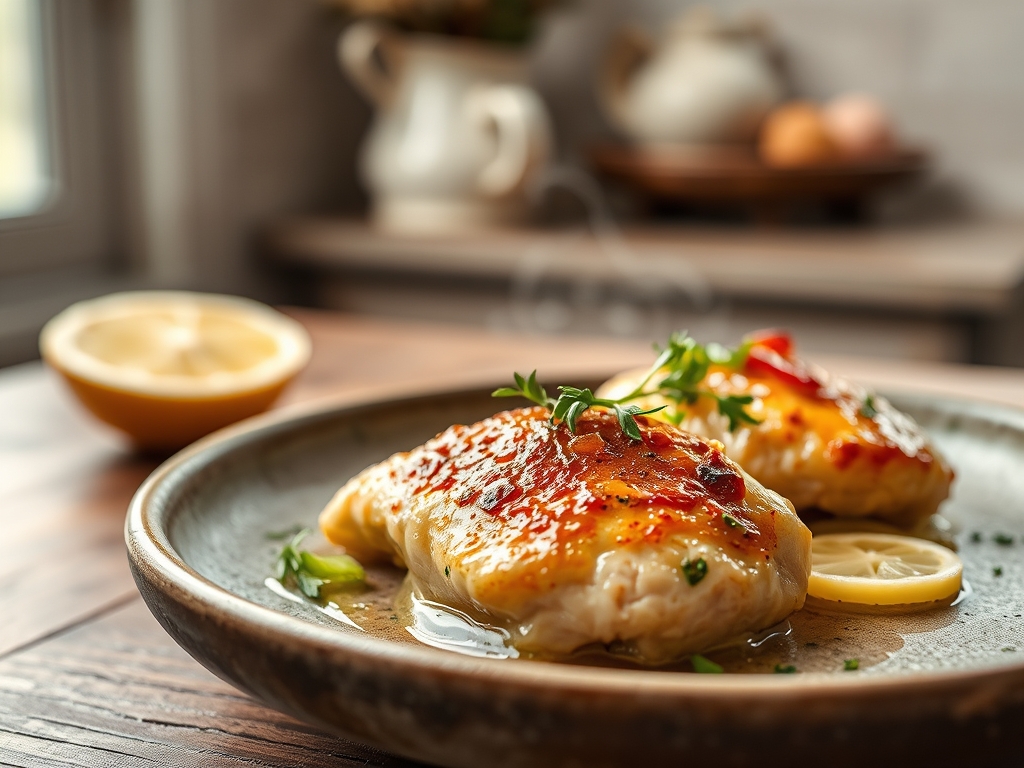
The sharp hiss of chicken thighs meeting hot stainless steel releases a plume of aromatic steam laced with citrus oil and browning proteins. That caramelized edge, the bright acid cut, the way lemon penetrates poultry without overpowering it, this is why easy lemon chicken recipes dominate weeknight rotations in professional and home kitchens alike. These six variations strip away fuss while preserving restaurant-quality results, each clocking in under 35 minutes from refrigerator to plate.
Lemon chicken occupies a sweet spot in the protein-acid matrix. The citric acid tenderizes surface proteins without the mushiness of prolonged marination, while the peel's limonene compounds add aromatic complexity that survives high heat. You're working with chemistry that rewards speed, making these recipes ideal for cooks who refuse to compromise on flavor despite time constraints.
Each variation here pivots on a different technique: pan searing, oven roasting, broiling, poaching, grilling, and a hybrid sear-to-bake. The common thread is citrus integration at multiple stages, building layers instead of relying on a single acidic punch at the end.
The Gathers
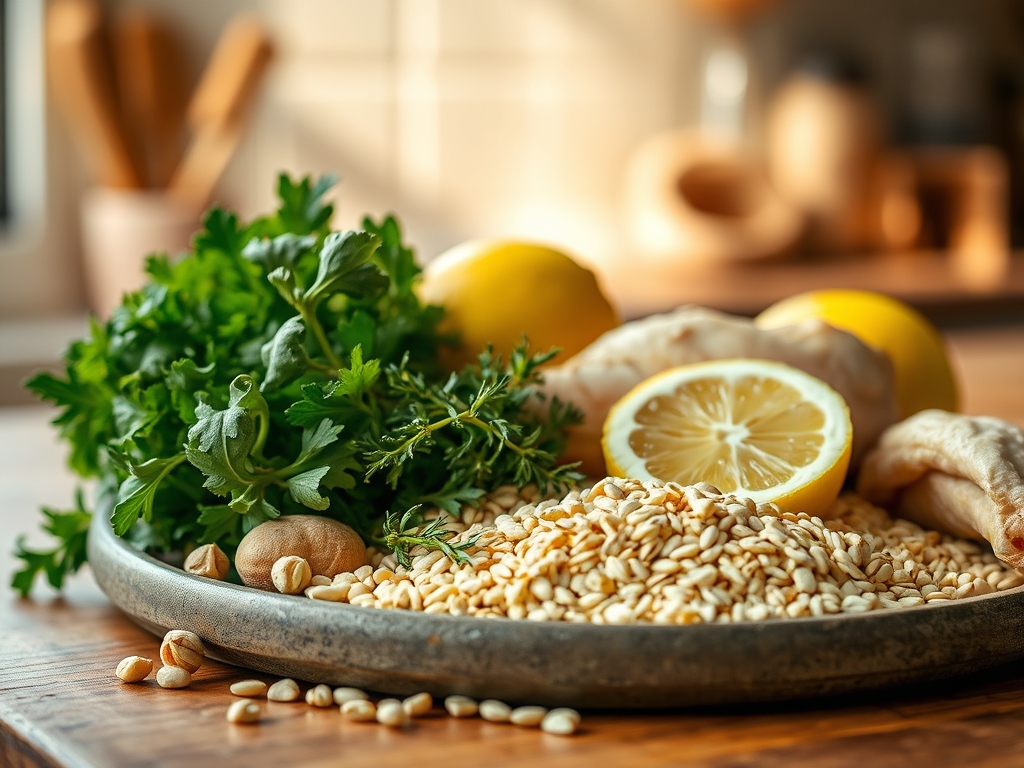
As you see in the ingredient spread below, the foundation starts with boneless, skinless chicken breasts or thighs (thighs carry more intramuscular fat and forgive timing errors). You'll need 4-6 lemons, both for juice and zest, because the volatile oils in the peel deliver aromatic punch that juice alone cannot match. Garlic cloves (at least 6, smashed), extra-virgin olive oil (not the expensive finishing kind, but a solid mid-range pressing), kosher salt, black pepper, and unsalted butter for emulsified pan sauces round out the core.
Secondary players include chicken stock (low-sodium, preferably homemade), fresh thyme or oregano, Dijon mustard for emulsification scaffolding, and honey to balance acidity. All-purpose flour appears in one variation for dredging, capers in another for briny contrast.
Smart Substitutions: Swap thighs for breasts if you prefer leaner meat, but reduce cook time by 3-4 minutes. Replace butter with ghee for a nuttier profile and higher smoke point. Use Meyer lemons when available; their lower acidity and floral notes create a softer, more complex sauce. No fresh herbs? Dried works at one-third the volume, added earlier in the cook to rehydrate.
The Clock
Total active time per recipe ranges from 8 to 12 minutes. Passive cooking spans 15 to 25 minutes, depending on whether you're using stovetop, oven, or a combination. Prep accounts for 5-7 minutes: pounding chicken to uniform thickness, zesting lemons, smashing garlic, measuring liquids.
Chef's Flow: Preheat your pan or oven while prepping proteins. Pound chicken first, then zest lemons directly over the meat so oils cling to the surface. Juice lemons into a single vessel, removing seeds with a fork. Smash garlic with the flat of your knife rather than mincing; larger pieces release flavor more gradually and won't scorch. Season chicken aggressively with salt 10 minutes before cooking to allow surface moisture to be drawn out and reabsorbed, creating a dry exterior that sears cleanly.
The Masterclass
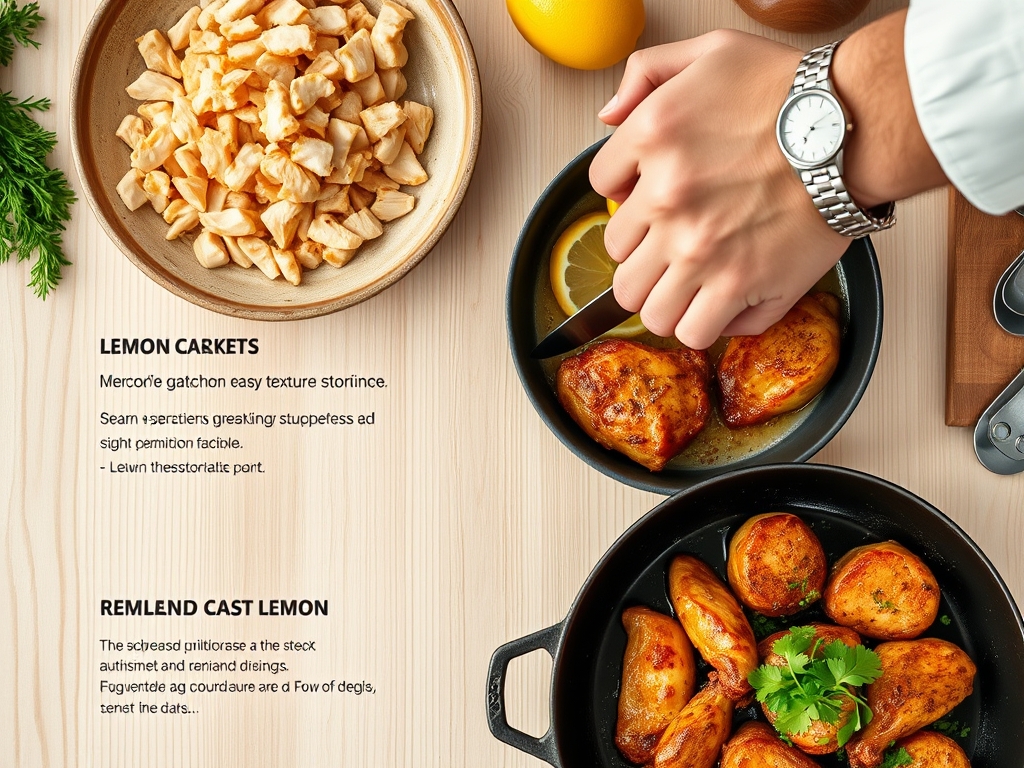
Note the texture shown in the step-by-step photos: golden crust, glossy sauce clinging to protein, visible char on lemon slices.
Step 1: Prep and Season the Protein
Butterfly or pound chicken breasts to 1/2-inch uniform thickness. Season both sides with kosher salt (1 teaspoon per pound) and black pepper. Let rest 10 minutes at room temperature.
Chef's Secret: Even thickness ensures even cooking. A 1/2-inch breast reaches 165°F in 4-5 minutes per side, eliminating guesswork and dryness.
Step 2: Sear in a Preheated Pan
Heat 2 tablespoons olive oil in a stainless or cast-iron skillet over medium-high (375°F surface temp). Add chicken smooth-side down. Do not move for 4 minutes.
Why It Works: Stationary contact allows Maillard browning. Moving the protein breaks developing bonds and causes sticking.
Step 3: Flip and Add Aromatics
Flip chicken, then immediately add smashed garlic cloves and lemon slices (1/4-inch thick) to the pan perimeter. Cook 4 minutes.
Chef's Secret: Garlic added after the flip infuses oil without burning. Lemon slices caramelize their sugars, adding bittersweet depth.
Step 4: Deglaze and Build the Sauce
Remove chicken to a warm plate. Add 1/2 cup chicken stock and 3 tablespoons lemon juice to the pan, scraping browned bits. Simmer 2 minutes, then swirl in 2 tablespoons cold butter off heat.
Why It Works: Cold butter emulsifies into the stock, creating a glossy, viscous sauce. The lecithin in butter stabilizes fat and water into a temporary emulsion.
Step 5: Finish with Thermal Carryover
Return chicken to the pan, spoon sauce over, and let rest 2 minutes off heat.
Chef's Secret: Carryover cooking adds 5-7°F. Pulling chicken at 160°F ensures a final temp of 165°F without rubbery texture.
Step 6: Garnish and Plate
Top with fresh thyme leaves and lemon zest. Serve immediately.
Why It Works: Raw zest added at the end delivers bright volatile oils that heat would destroy.
Nutritional Info
Per serving (6 oz chicken breast, 2 oz sauce): 280 calories, 38g protein, 6g carbohydrates (primarily from lemon sugars and flour if used), 11g fat (7g from olive oil and butter, 4g from chicken). Sodium: 620mg (controllable via stock choice). Vitamin C: 35% DV from lemon juice and zest.
Thigh-based versions add roughly 80 calories and 9g fat per serving but deliver superior moisture retention.
Dietary Swaps
Keto/Low-Carb: Omit flour dredging and honey. The recipe is already under 6g net carbs. Use ghee instead of butter to reduce trace lactose.
Gluten-Free: Replace all-purpose flour with almond flour or cornstarch for dredging. Ensure chicken stock is certified gluten-free.
Vegan: Substitute firm tofu or tempeh, pressed and sliced 1/2-inch thick. Use vegetable stock and replace butter with cashew cream blended with nutritional yeast for umami depth. Cook time reduces to 3 minutes per side.
Serving & Presentation
Plating Idea 1: Pool sauce on a warm plate, center the chicken, crown with a charred lemon wheel and microgreens. Wipe plate edges clean for precision.
Plating Idea 2: Slice chicken on a bias into 1-inch strips, fan over herbed couscous, drizzle pan sauce in a zigzag, finish with pomegranate arils for color contrast.
Plating Idea 3: Serve family-style on a warmed platter, chicken overlapping slightly, lemon slices tucked between pieces, sauce ladled generously, scattered capers and fresh parsley.
The Pro-Dodge
Pitfall 1: Overcrowding the pan drops surface temperature below the Maillard threshold (around 300°F), causing steaming instead of searing. Fix: Cook in batches or use a larger pan.
Pitfall 2: Adding lemon juice too early causes proteins to seize and toughen. Fix: Reserve citrus for deglazing or finishing, after the sear is complete.
Pitfall 3: Butter added to a boiling sauce breaks and becomes greasy. Fix: Remove pan from heat, let bubbling subside, then swirl in cold butter while gently shaking the pan.
The Meal Prep Corner
Cooked chicken holds in an airtight container for 4 days refrigerated. Store sauce separately to prevent sogginess. Reheat chicken in a 350°F oven for 8 minutes, covered with foil, then add sauce in the final 2 minutes. Avoid microwaving; it depletes moisture and toughens proteins.
For freezing, portion chicken and sauce into vacuum-sealed bags. Freeze flat for efficient storage. Thaw overnight in the refrigerator, then reheat using the oven method. Frozen chicken maintains quality for 3 months.
Raw marinated chicken can be prepped in zip-top bags: combine lemon juice, zest, garlic, olive oil, salt, and pepper. Refrigerate up to 24 hours or freeze for 2 months. Thaw and proceed directly to searing.
The Wrap-Up
Six methods, one core principle: acid, fat, heat, and restraint. These easy lemon chicken recipes prove that speed and sophistication are not mutually exclusive when you understand the science beneath the sizzle. Each variation respects the integrity of the protein while coaxing out nuanced citrus character through layered application.
Whether you're searing for Maillard complexity, roasting for hands-off convenience, or broiling for charred intensity, the lemon-chicken partnership adapts without losing its essential brightness. Master these techniques, and you'll have a rotation that never bores, never fails, and always delivers plate-licking satisfaction.
Try one tonight. Time yourself. Then share your sear photo and preferred variation in the comments. Let's build a library of real-world tweaks and wins.
The Kitchen Table
Q: Can I use bottled lemon juice instead of fresh?
A: Technically yes, but you'll lose the aromatic oils from zest and the bright, complex acidity of fresh juice. Bottled juice often contains preservatives that add metallic notes. If you must, add 1/2 teaspoon of lemon zest per 2 tablespoons of bottled juice to compensate.
Q: Why does my pan sauce always split?
A: Emulsions break when fat and water separate, usually due to excessive heat or insufficient emulsifier. Always remove the pan from heat before adding butter, and ensure your liquid base contains some starch or protein (from stock or mustard) to stabilize the emulsion.
Q: How do I prevent chicken breasts from drying out?
A: Three factors: uniform thickness (pound to 1/2 inch), accurate temperature (pull at 160°F for carryover to 165°F), and a rest period (2-3 minutes off heat before slicing). Brining for 30 minutes in 5% salt solution also helps retain moisture.
Q: Can I make this ahead for a dinner party?
A: Sear chicken fully, undercook by 2 minutes, then refrigerate. Thirty minutes before serving, bring to room temperature and finish in a 375°F oven for 6-8 minutes while you prepare the pan sauce fresh. This method preserves texture better than full reheating.
Q: What's the best way to zest lemons without the bitter white pith?
A: Use a Microplane grater at a shallow angle, rotating the lemon frequently. Stop when you see white. Alternatively, use a Y-peeler to remove strips, then mince finely, discarding any pith that comes along.