
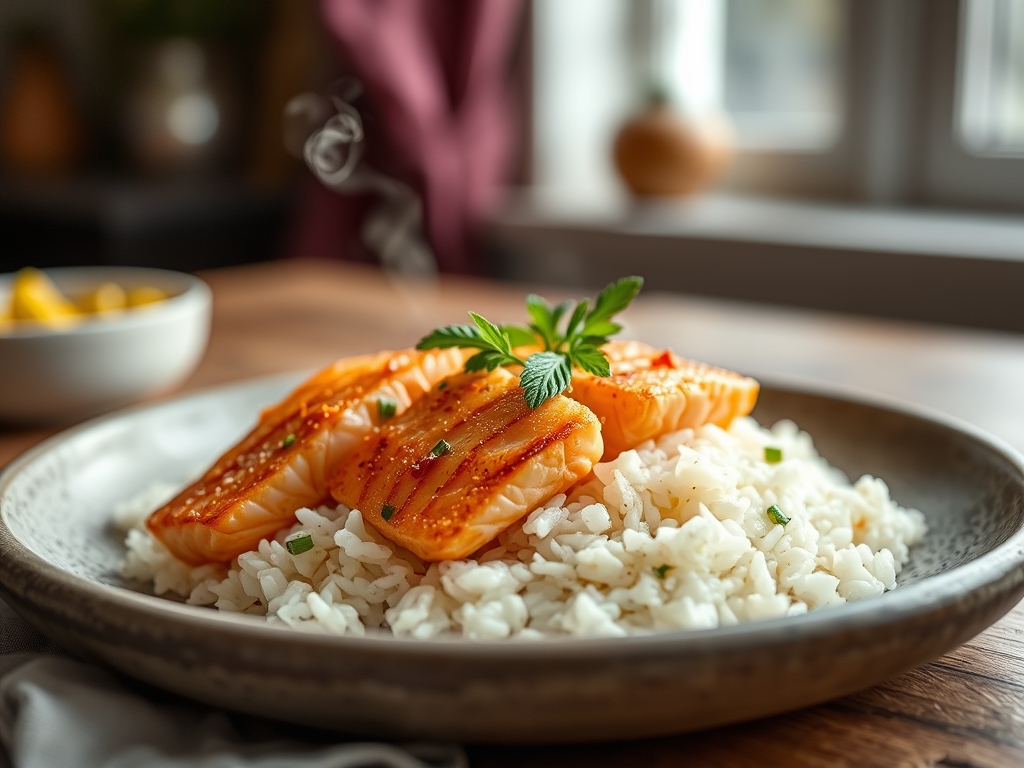
Imagine the hiss of a heavy-bottomed skillet meeting a cold-water fillet. The kitchen fills with the scent of toasted grains and oceanic fat. Mastering white rice and salmon recipes is more than a Tuesday night habit; it is a lesson in the delicate balance between starch and protein. We are chasing that shatter-crisp skin and the fluffy, distinct grains that only precise hydration can provide.
The magic of these pairings lies in the contrast of textures. Salmon provides a rich, viscous mouthfeel thanks to its high omega-3 content. Meanwhile, white rice acts as a neutral, absorbent canvas. When you flake a piece of medium-rare fish over a bed of jasmine or basmati, you are engaging in a culinary synergy that is both comforting and technically sophisticated. We are going to explore ten distinct ways to elevate this duo, from citrus-forward glazes to deeply savory miso infusions.
Whether you are looking for a fifteen-minute sear or a slow-roasted masterpiece, the foundation remains the same. You need high-quality ingredients and a fundamental understanding of how heat transforms fat and starch. Let us get your mise-en-place ready and dive into the mechanics of the perfect bowl.
The Gathers:
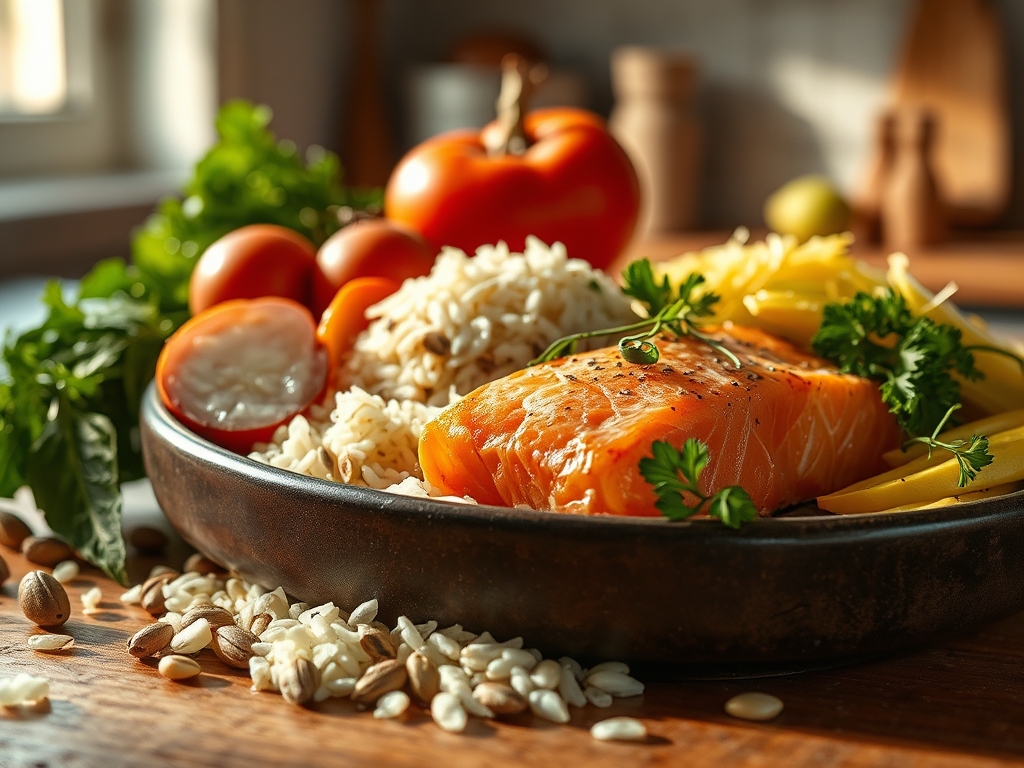
To execute these white rice and salmon recipes with professional finesse, your workstation must be organized. Start with your protein: look for center-cut fillets with vibrant color and a firm, non-tacky surface. For the rice, long-grain varieties like Jasmine offer a floral aroma, while short-grain Calrose provides a sticky, cohesive bite.
The Pantry Essentials:
- High-Smoke Point Oil: Avocado or grapeseed oil is essential for searing without scorching.
- Aromatics: Fresh ginger, garlic cloves, and scallions to infuse the cooking fat.
- Acidity: Rice vinegar or fresh lime juice to cut through the fatty acids of the fish.
- Salt: Diamond Crystal kosher salt for even distribution and moisture extraction.
Smart Substitutions:
If you are out of fresh ginger, a pinch of ground ginger provides the heat but lacks the bright, piquant zing. If white rice is unavailable, pearled couscous offers a similar textural profile, though the starch content differs significantly. For a soy-free alternative, coconut aminos provide a similar umami depth with a slightly sweeter finish. Use a microplane to zest your citrus and grate your aromatics; this increases the surface area and allows flavors to infuse the oil almost instantly.
The Clock
Efficiency in the kitchen is about the Chef's Flow. This is the art of overlapping tasks so that the rice finishes steaming exactly as the salmon reaches its resting period.
- Prep Time: 15 minutes. This includes rinsing the rice until the water runs clear to remove excess surface starch, which prevents gumminess.
- Cook Time: 18 to 22 minutes. Most white rice varieties require a 15-minute simmer followed by a 5-minute rest.
- Total Time: Approximately 40 minutes.
The flow begins with the rice. While the grains simmer, you prepare your salmon by patting it bone-dry with paper towels. This is a non-negotiable step. Moisture is the enemy of the Maillard reaction; any surface water will cause the fish to steam rather than sear. Use your digital scale to portion fillets into equal 6-ounce weights for uniform cooking.
The Masterclass
1. The Starch Foundation
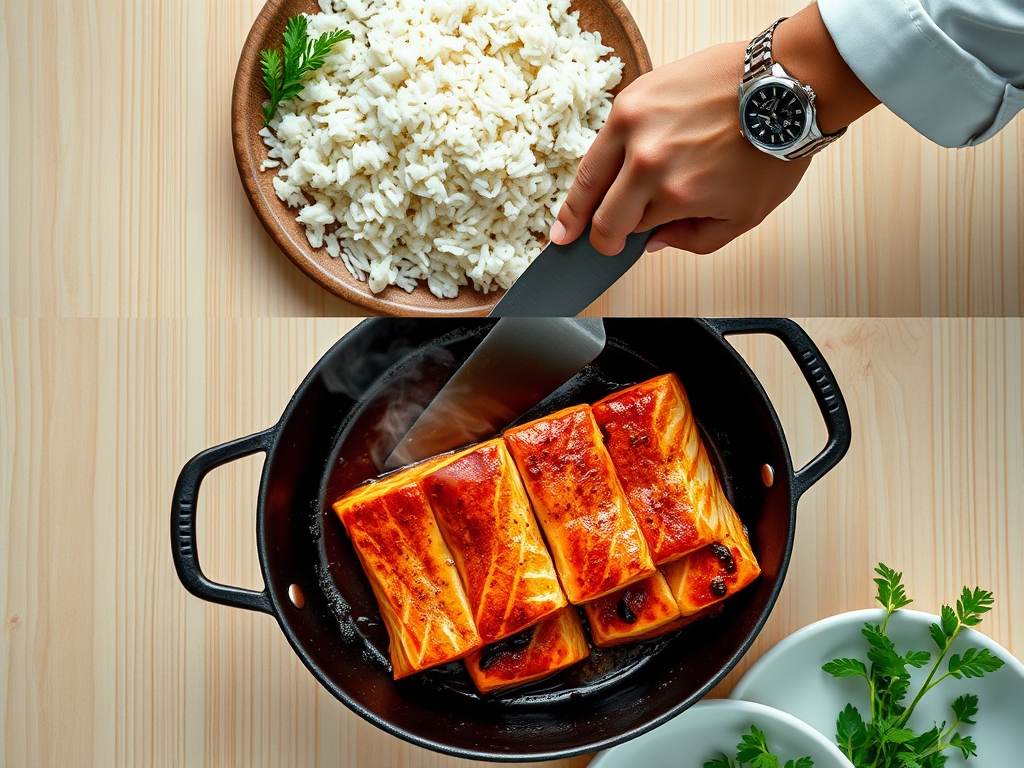
Rinse your rice in a fine-mesh strainer until the effluent is transparent. Combine with water in a heavy-bottomed pot using a 1:1.5 ratio. Bring to a boil, then reduce to the lowest setting and cover tightly.
Pro Tip: This process involves gelatinization, where starch granules absorb water and swell. Resting the rice for five minutes after cooking allows the moisture to redistribute, preventing the bottom layer from becoming soggy.
2. The Protein Prep
Remove your salmon from the refrigerator 15 minutes before cooking to take the chill off. Season generously with kosher salt.
Pro Tip: Cold protein causes the muscle fibers to seize when they hit a hot pan. Bringing the fish closer to room temperature ensures even thermal conductivity, preventing a raw center and overcooked exterior.
3. The Sear
Heat your skillet until the oil shimmers. Place the salmon skin-side down. Use a flexible fish spatula to press the fillet firmly against the pan for the first 30 seconds.
Pro Tip: This pressure prevents the skin from curling as the collagen proteins contract. The Maillard reaction occurs between 285 and 330 degrees Fahrenheit, creating the complex flavors and brown crust we crave.
4. The Aromatics
During the last two minutes of cooking, toss in smashed garlic and a knob of butter. Tilt the pan and use a large spoon to baste the fish with the foaming fat.
Pro Tip: This is called arroser. The hot butter acts as a finishing medium, infusing the salmon with a nutty aroma while the lactic acid in the butter helps tenderize the flesh.
5. The Assembly
Fluff the rice with a fork to aerate the grains. Place the salmon atop the rice and drizzle with any remaining pan juices or a prepared glaze like teriyaki or lemon-herb.
Pro Tip: Aerating the rice releases trapped steam, which prevents the grains from continuing to cook and becoming mushy. This ensures each bite maintains its structural integrity.
The Deep Dive
Macro Nutrition:
A standard serving of these white rice and salmon recipes provides approximately 35 grams of high-quality protein and 45 grams of complex carbohydrates. Salmon is a powerhouse of Vitamin B12 and Potassium. While white rice is lower in fiber than brown, it is easier on the digestive system and provides rapid glycogen replenishment.
Dietary Swaps:
- Vegan: Replace salmon with thick slabs of "Tuna" made from marinated watermelon or firm tofu pressed and seared with nori sheets for an oceanic flavor.
- Keto: Swap the white rice for cauliflower rice sautéed in grass-fed butter to maintain the high-fat, low-carb ratio.
- Gluten-Free: Ensure your soy sauce is replaced with Tamari.
The Fix-It:
- Gummy Rice: You likely skipped the rinsing step or used too much water. Spread the rice on a sheet tray and let it air dry for 10 minutes before using it in a stir-fry to "save" the texture.
- Stuck Salmon: You tried to flip it too early. Protein bonds to the pan initially; once the crust forms, it will naturally release. Patience is a technical requirement.
- Dry Fish: Overcooking is the culprit. Use a digital thermometer to pull the salmon at 125 degrees Fahrenheit for a perfect medium-rare after carryover cooking.
Meal Prep Science:
When reheating, the goal is to prevent the "fishy" smell caused by the oxidation of fatty acids. Microwave the rice with a damp paper towel over it to create a steam chamber. Heat the salmon separately at a lower power setting to avoid toughening the proteins.
The Wrap-Up
Mastering white rice and salmon recipes is your ticket to a reliable, restaurant-quality meal at home. It is a dance of timing and temperature that rewards you with incredible flavor and nutrition. Once you understand the science of the sear and the hydration of the grain, you can experiment with endless glazes and toppings. Now, grab your tongs and your favorite skillet; it is time to turn these technical steps into your new favorite dinner tradition!
The Kitchen Table
How do I get the skin extra crispy?
Ensure the skin is bone-dry and the pan is medium-high heat. Use a heavy-bottomed skillet and press the fish down with a spatula for the first 30 seconds to maximize surface contact and heat transfer.
Can I cook salmon and rice in one pot?
Yes, this is known as a "pilaf" method. Place the seasoned fillets on top of the rice during the last 8 to 10 minutes of steaming. The steam gently poaches the fish while the rice absorbs the juices.
What is the best rice for salmon?
Jasmine rice is the gold standard for its floral aroma and fluffy texture. However, short-grain sushi rice is excellent if you prefer a stickier base that holds onto sauces and glazes more effectively.
How long does cooked salmon last in the fridge?
Stored in an airtight container, cooked salmon remains fresh for up to three days. For the best quality, store the rice and fish in separate containers to maintain their individual textures and moisture levels.