
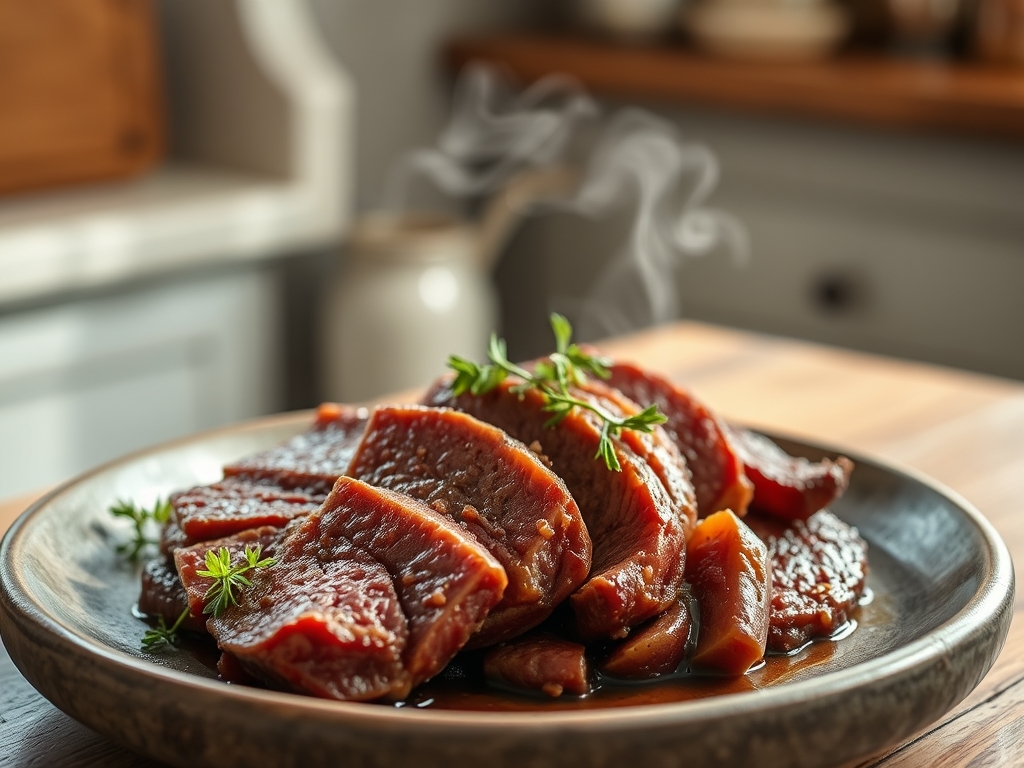
The scent of brine and clove is currently doing a victory lap around my kitchen; it is the unmistakable perfume of the ultimate comfort meal. If you are searching for slow cooked corned beef recipes that actually deliver a melt-in-your-mouth texture rather than a stringy disappointment, you have arrived at the right place. We are moving beyond basic boiling. We are talking about a transformative, low-and-slow process that turns a tough pectoral muscle into a buttery masterpiece.
The secret lies in the patience of the braise. Corned beef is essentially a science project involving salt-cured brisket, a cut notorious for its heavy connective tissue. To achieve that fork-tender finish, we must navigate the delicate balance of collagen breakdown without drying out the muscle fibers. It is a game of thermal regulation and moisture management. Grab your favorite apron and a glass of something crisp; we are about to elevate this Irish-American classic into a gourmet experience that feels both nostalgic and incredibly sophisticated.
The Gathers:
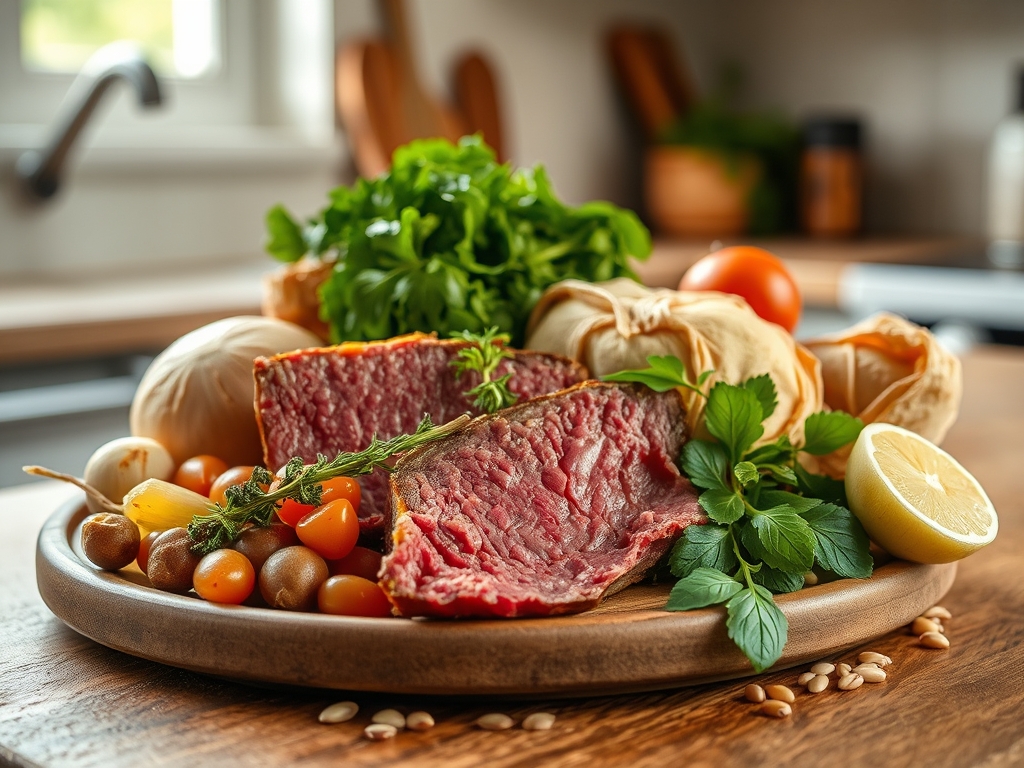
To begin, clear your workspace with a bench scraper to ensure a pristine surface for your mise-en-place. You will need a three to four pound corned beef brisket, preferably the point cut for its superior fat marbling. Unlike the leaner flat cut, the point cut contains more intramuscular fat that will render beautifully during the long cook time, providing a viscous, rich mouthfeel.
For the aromatics, gather four large carrots, a head of garlic sliced crosswise to expose the cloves, and two yellow onions. Your spice kit should include the standard pickling packet but we are going to amplify it. Add three star anise pods, a tablespoon of black peppercorns, and four bay leaves. For the liquid base, skip the plain water. We want a piquant profile, so grab a 12-ounce bottle of stout beer and enough low-sodium beef bone broth to submerge the meat.
Smart Substitutions: If you are avoiding alcohol, a splash of apple cider vinegar mixed with ginger ale provides the necessary acidity and sugar to mimic the fermentation notes of beer. For those looking to lower the sodium, you can infuse your own spice blend using mustard seeds, coriander, and allspice to replace the pre-packaged salt-heavy seasoning.
The Clock:
Efficiency in the kitchen is all about the Chef's Flow. Your active prep time is a brisk 20 minutes; this involves washing vegetables and searing the meat. The passive cooking time is where the magic happens. On a low setting, expect a six to eight hour duration. If you are using a high setting, you can finish in four to five hours, though the texture suffers slightly.
The "Flow" dictates that you prep your vegetables while the brisket is searing in a heavy-bottomed skillet. Do not chop your cabbage until the final hour of cooking. This prevents the leaves from becoming a gray, sulfurous mush. By staggering your vegetable additions, you ensure every component hits its peak texture simultaneously.
The Masterclass:
1. The Desalination Soak
Place your brisket in a bowl of cold water for 30 minutes before cooking. This removes excess surface brine that can make the final sauce overly salty.
Pro Tip: This process utilizes osmotic pressure to draw out surface nitrates, ensuring the salt levels are balanced rather than overwhelming.
2. The Maillard Sear
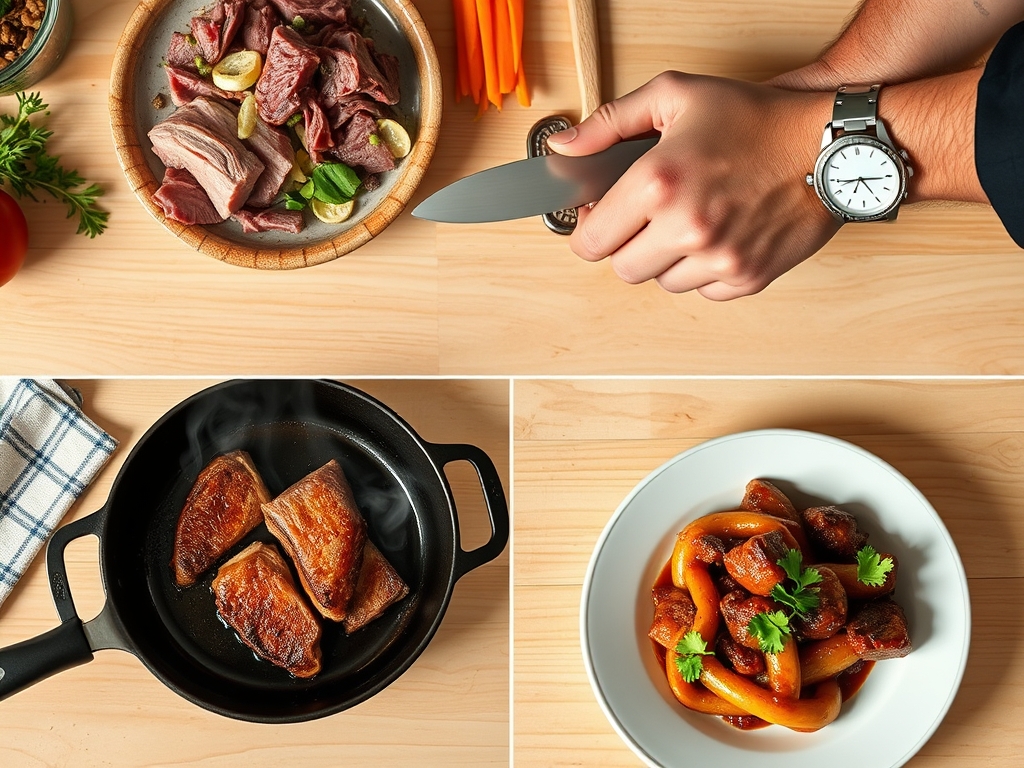
Pat the meat bone-dry with paper towels. Heat a heavy-bottomed skillet with a high-smoke-point oil and sear the brisket on all sides until a deep brown crust forms.
Pro Tip: This triggers the Maillard reaction, creating complex flavor compounds and melanoidins that a simple boil can never achieve.
3. Deglazing the Fond
After removing the meat, pour a splash of your stout into the hot skillet. Use a wooden spoon to scrape up the brown bits (the fond).
Pro Tip: Deglazing recovers caramelized proteins that act as a natural flavor enhancer for your braising liquid.
4. Layering the Aromatics
Place your onions, garlic, and carrots at the bottom of the slow cooker to act as a natural roasting rack for the beef.
Pro Tip: This prevents the meat from sticking to the bottom and allows for even thermal distribution through convection.
5. The Low and Slow Submersion
Add the beef and pour in your broth and beer until the meat is two-thirds submerged. Sprinkle your spices over the top.
Pro Tip: Keeping the meat partially submerged allows the top to develop a "bark" while the bottom undergoes hydrolytic collagen conversion.
6. The Acid Balance
Halfway through the cook, add a tablespoon of stone-ground mustard and a teaspoon of honey to the liquid.
Pro Tip: Acidity functions as a denaturing agent, helping to further break down stubborn protein chains for a softer bite.
7. The Cabbage Countdown
Add your cabbage wedges only during the final 45 to 60 minutes of the cooking cycle.
Pro Tip: This preserves the cellulose structure of the vegetable, providing a necessary crunch to contrast the soft meat.
8. The Gentle Extraction
Use sturdy tongs to carefully remove the brisket. It will be fragile, so do not lift it by a single corner or it may shred prematurely.
Pro Tip: Handling the meat gently prevents the loss of internal juices that are currently in a highly fluid state.
9. The Rest Period
Transfer the beef to a carving board and tent it loosely with foil for at least 15 minutes before slicing.
Pro Tip: This allows for moisture redistribution; the muscle fibers relax and reabsorb the juices, ensuring the meat stays moist after cutting.
10. The Bias Cut
Identify the direction of the grain and use a sharp carving knife to slice perpendicular to those fibers.
Pro Tip: Slicing against the grain shortens the muscle fibers, making the meat feel significantly more tender during mastication.
The Deep Dive:
From a macro perspective, corned beef is a powerhouse of protein and B vitamins, though it is high in sodium. A standard 4-ounce serving contains roughly 280 calories and 16 grams of fat. To make this Keto-friendly, simply swap the potatoes for radishes or extra cauliflower. For a Vegan "Corned" alternative, use large wedges of salt-cured celeriac or beets, though the cooking time will drop to 45 minutes.
The Fix-It:
- Too Salty? Drop a peeled, raw potato into the liquid for the last 30 minutes; it acts as a sponge for excess sodium.
- Too Tough? You likely pulled it too early. If the internal temp is not 195F, the collagen has not turned to gelatin. Keep cooking.
- Greasy Sauce? Pour the liquid into a saucier and use a fat separator or a cold spoon to skim the surface.
Meal Prep Science: To reheat, slice the meat while cold and submerge it in a shallow pan with leftover broth. Cover and heat at 300F. This prevents the "Warmed Over Flavor" caused by lipid oxidation, keeping the beef as succulent as it was on day one.
The Wrap-Up:
You are now armed with the technical prowess to turn a humble brisket into the star of the table. By mastering the sear, the soak, and the rest, you have elevated your slow cooked corned beef recipes from a basic chore to a culinary triumph. Remember; the best meals are the ones where science meets soul. Now, go grab your digital scale, measure out those spices, and let the slow cooker do the heavy lifting while you take all the credit.
The Kitchen Table:
How do I keep my corned beef from being rubbery?
Rubbery meat usually means it was undercooked. Ensure you reach an internal temperature of 195 degrees Fahrenheit. This is the thermal threshold where tough collagen finally transforms into silky, tender gelatin for that perfect pull-apart texture.
Can I cook corned beef on high instead of low?
Yes, but proceed with caution. High heat can cause the muscle fibers to contract too quickly, squeezing out moisture. For the most tender results, the "low" setting for eight hours is the gold standard for structural integrity.
Do I need to wash the meat before cooking?
Always rinse the brisket under cold water to remove the "bloody" packing brine. This prevents the cooking liquid from becoming cloudy and helps manage the final salt concentration of your dish for a cleaner, more balanced flavor.
Why is my cabbage always mushy?
Mushy cabbage is the result of over-boiling. Add your cabbage wedges during the final 45 minutes of the slow cooking cycle. This ensures the leaves are steamed to a tender-crisp state rather than disintegrating into the broth.