
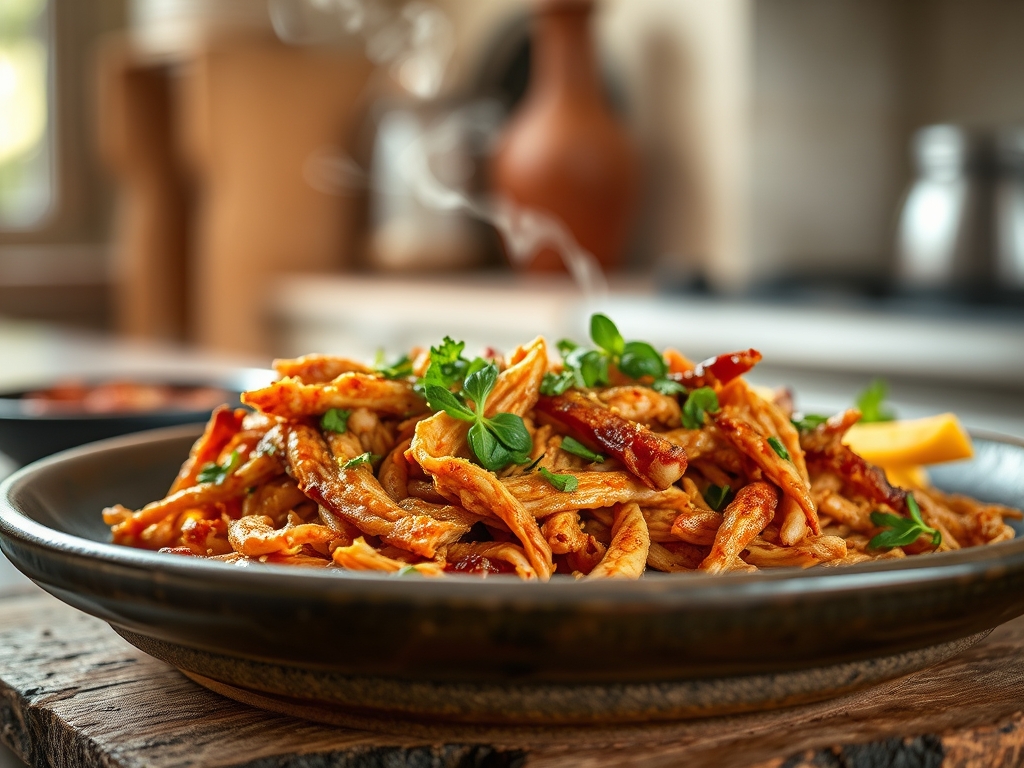
Picture the steam rising from a heavy bottomed skillet as the sugar in the sauce begins to caramelize; it is a scent that bridges the gap between backyard nostalgia and gourmet execution. When you master the art of shredded chicken recipes bbq style, you are not just cooking; you are engineering a balance of smoke, acid, and protein. It is the ultimate culinary chameleon for your weeknight rotation.
The secret to that perfect, melt in your mouth texture lies in the structural integrity of the muscle fibers. We are looking for that precise moment when the collagen breaks down into gelatin without the meat becoming a dry, fibrous mess. Whether you are piling it onto a toasted brioche bun or folding it into a crisp taco shell, the versatility of this dish is unmatched. It is efficient, it is high protein, and quite frankly, it is the smartest way to feed a crowd without breaking a sweat. Let us dive into the mechanics of the perfect shred.
The Gathers:
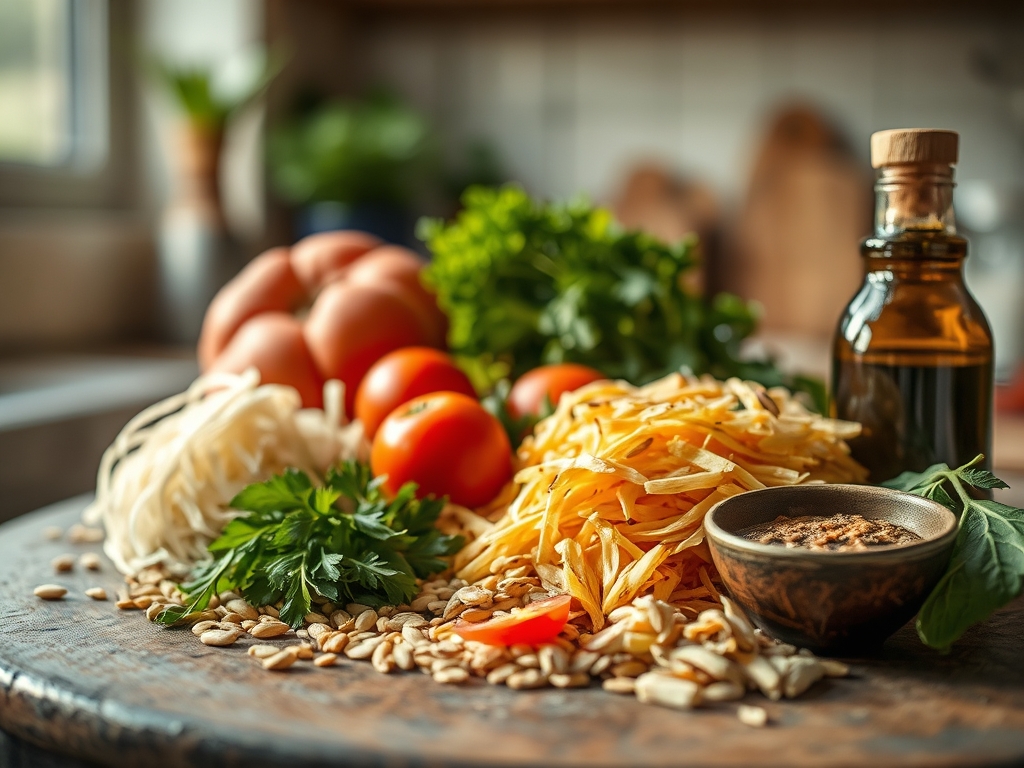
Before we ignite the heat, we must curate our palette. Your mise en place is the foundation of flavor. For the base, select five pounds of boneless, skinless chicken thighs. While breasts are leaner, thighs contain a higher concentration of myoglobin and connective tissue, which ensures a moist result after the long rendering process.
Your aromatics should include a finely minced yellow onion and four cloves of garlic crushed with a microplane to release their essential oils. For the sauce, you will need a viscous base of organic ketchup or tomato paste, apple cider vinegar for a piquant bite, and liquid smoke to simulate the wood fired depth of a professional smoker. Do not forget the dry rub: smoked paprika, mustard powder, and dark brown sugar. The sugar is critical; it facilitates the Maillard reaction, creating those complex, savory notes that define great barbecue.
Smart Substitutions:
If you are watching your refined sugar intake, swap the brown sugar for maple syrup or a dash of blackstrap molasses. For a heat upgrade, replace standard paprika with chipotle powder to infuse a deep, earthy spice. If you are out of apple cider vinegar, a splash of pineapple juice provides the necessary acidity while adding natural enzymes that help tenderize the meat.
The Clock
Efficiency in the kitchen is all about the Chef's Flow. Expect a total active prep time of 15 minutes, with a passive cook time ranging from 30 minutes in a pressure cooker to 4 hours in a slow cooker.
The Chef's Flow dictates that you prepare your sauce and rub while the chicken reaches room temperature. Never throw ice cold meat into a hot pot; this causes the muscle fibers to seize, resulting in a rubbery texture. By the time your liquid base is whisked and aerated, your chicken will be ready for the sear. This synchronized timing ensures that no heat is wasted and every second contributes to the depth of the final dish.
The Masterclass
1. The Sear and Deglaze
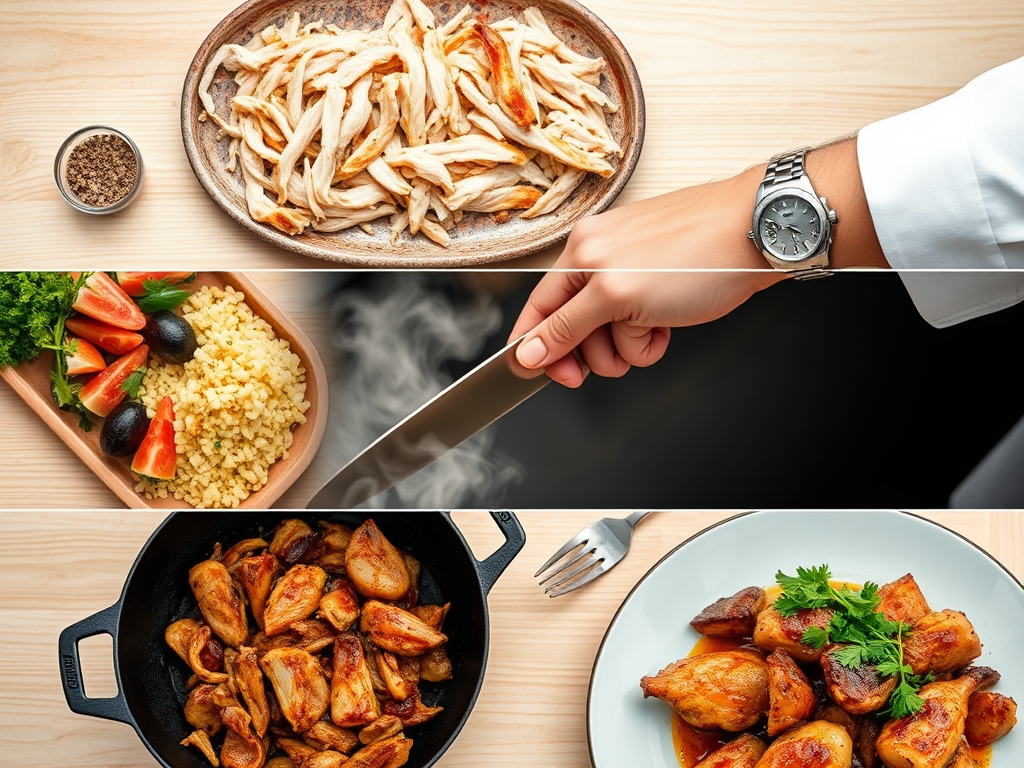
Heat your heavy bottomed skillet over medium high heat with a high smoke point oil like avocado oil. Sear the chicken in batches to avoid overcrowding, which causes steaming rather than browning. Once a golden crust forms, remove the meat and use a splash of chicken stock to deglaze the pan, scraping up the brown bits (the fond) with a sturdy bench scraper.
Pro Tip: This browning is the Maillard reaction in action. By searing first, you create hundreds of new flavor compounds that a slow cooker alone cannot produce.
2. The Low and Slow Infusion
Place the seared chicken into your vessel of choice and pour over the whisked BBQ mixture. Ensure the meat is partially submerged so the heat transfers evenly through the liquid. Cover tightly to trap the steam, which creates a pressurized environment that breaks down the tough proteins.
Pro Tip: Maintain a consistent internal temperature. Collagen begins to transform into silky gelatin at approximately 160 degrees Fahrenheit, but the "sweet spot" for shredding is actually closer to 195 degrees.
3. The Precision Shred
Once the meat is tender, transfer it to a large stainless steel bowl. Use two forks or a stand mixer with the paddle attachment on low speed to pull the meat apart. The goal is to maximize surface area so every strand can be coated in the reduced sauce.
Pro Tip: Shred the meat while it is still hot. As the chicken cools, the proteins realign and firm up, making it significantly harder to achieve those fine, delicate strands.
4. The Sauce Reduction
While the meat rests, pour the remaining cooking liquid into a saucier. Simmer over medium heat until the water evaporates and the sauce becomes thick and glossy. This concentrates the sugars and spices, ensuring the flavor is not diluted.
Pro Tip: This process is called reduction through evaporation. It intensifies the viscosity of the sauce without needing to add artificial thickeners like cornstarch.
5. The Final Emulsification
Toss the shredded chicken back into the concentrated sauce. Use tongs to fold the meat gently, ensuring every fiber is saturated. The residual heat from the sauce will further soften the chicken.
Pro Tip: This is the stage of "carryover cooking." Even after the heat is off, the internal energy of the sauce continues to tenderize the meat for several minutes.
6. The Rest and Set
Allow the finished BBQ chicken to sit for five minutes before serving. This allows the fibers to reabsorb the juices, preventing a "wet" sandwich that falls apart.
Pro Tip: Resting allows for the redistribution of moisture. If you serve immediately, the juices will run out; if you wait, they stay locked within the meat.
The Deep Dive
From a nutritional standpoint, this dish is a powerhouse. A standard serving offers roughly 35 grams of protein with moderate fats if using thighs. To make this Keto friendly, simply use a sugar free sweetener in your sauce. For a Vegan twist, the same BBQ technique works beautifully with pulled jackfruit or oyster mushrooms.
The Fix-It:
- Too Dry? Add a tablespoon of butter or bone broth to the shredded meat to reintroduce fats and moisture.
- Too Sweet? Balance the sugar with a squeeze of fresh lime or an extra teaspoon of apple cider vinegar.
- Too Thin? If the sauce is watery, continue to reduce it in a saucier until it coats the back of a spoon.
Meal Prep: To reheat and maintain "day one" quality, use a vacuum sealer or airtight glass containers. Reheat in a skillet with a splash of water to create steam, which prevents the chicken from becoming "jerky" in the microwave.
The Wrap-Up
Mastering shredded chicken recipes bbq style is a gateway to culinary confidence. You have learned the science of the Maillard reaction, the importance of collagen breakdown, and the art of the perfect reduction. Now, take these techniques and make them your own. Whether it is for a Sunday meal prep or a Friday night party, you are now the expert in the room. Grab your tongs and get to work!
The Kitchen Table
How do I prevent my shredded chicken from being dry?
Always use chicken thighs for a higher fat content. If using breasts, ensure you do not exceed an internal temperature of 165 degrees before shredding and immediately toss the meat in a warm, viscous sauce to lock in moisture.
Can I make this recipe in an Instant Pot?
Yes. Cook the chicken on high pressure for 15 minutes with one cup of liquid. Allow a natural pressure release for 10 minutes to prevent the muscle fibers from seizing, then shred and reduce the sauce using the saute function.
What is the best way to shred chicken quickly?
For large batches, use a stand mixer with the paddle attachment. Place warm, cooked chicken in the bowl and run on low speed for 30 seconds. This creates a uniform texture much faster than using manual forks or tongs.
How long does BBQ shredded chicken last in the fridge?
Stored in an airtight glass container, it will remain fresh and safe for up to four days. For longer storage, freeze it in vacuum sealed bags for up to three months to prevent freezer burn and preserve the sauce's emulsion.