
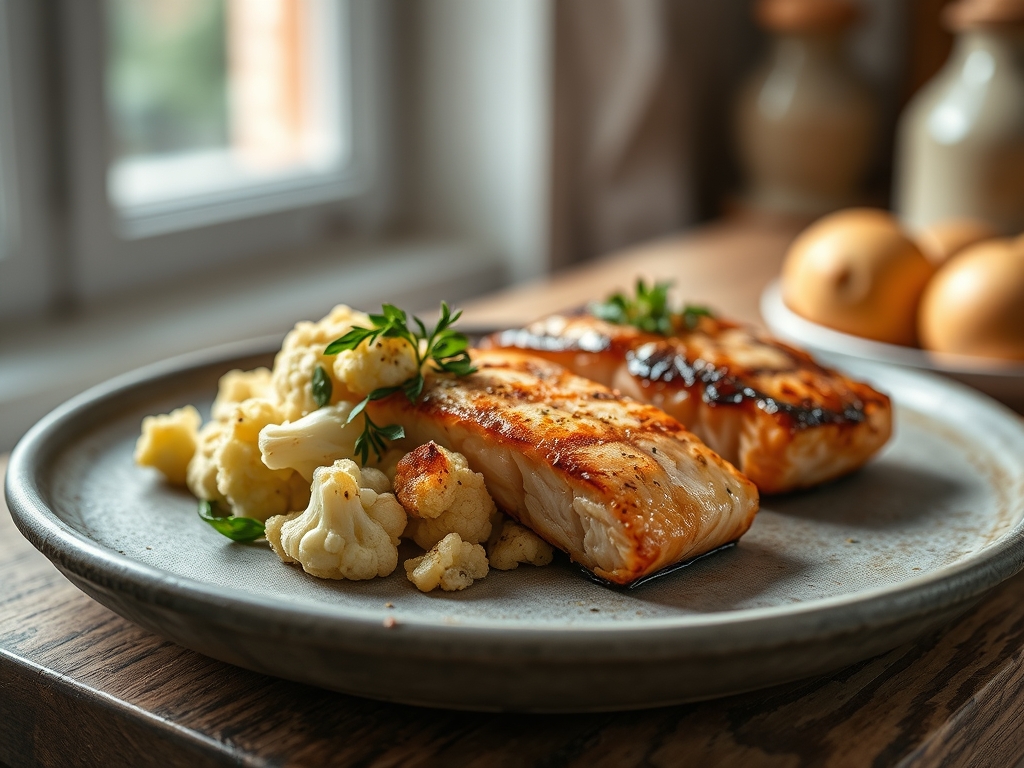
The scent of searing fatty acids hitting a screaming hot cast iron pan is the ultimate kitchen siren song. When you master cauliflower and salmon recipes, you are playing with a sophisticated balance of cruciferous earthiness and oceanic richness. This duo is not just a health trend; it is a masterclass in texture and temperature contrast.
Imagine a fillet of King Salmon with skin so shattered-glass crisp it crackles under your fork, perched atop a cloud of velvet cauliflower puree. The mild, nutty profile of the floret acts as a blank canvas for the bold, piquant notes of a lemon caper butter. Whether you are roasting, searing, or poaching, these two ingredients provide a nutritional powerhouse packed with Omega-3s and sulforaphane. It is the kind of meal that makes you feel like a culinary genius while requiring surprisingly little effort if you understand the underlying chemistry of heat and fat.
The Gathers:
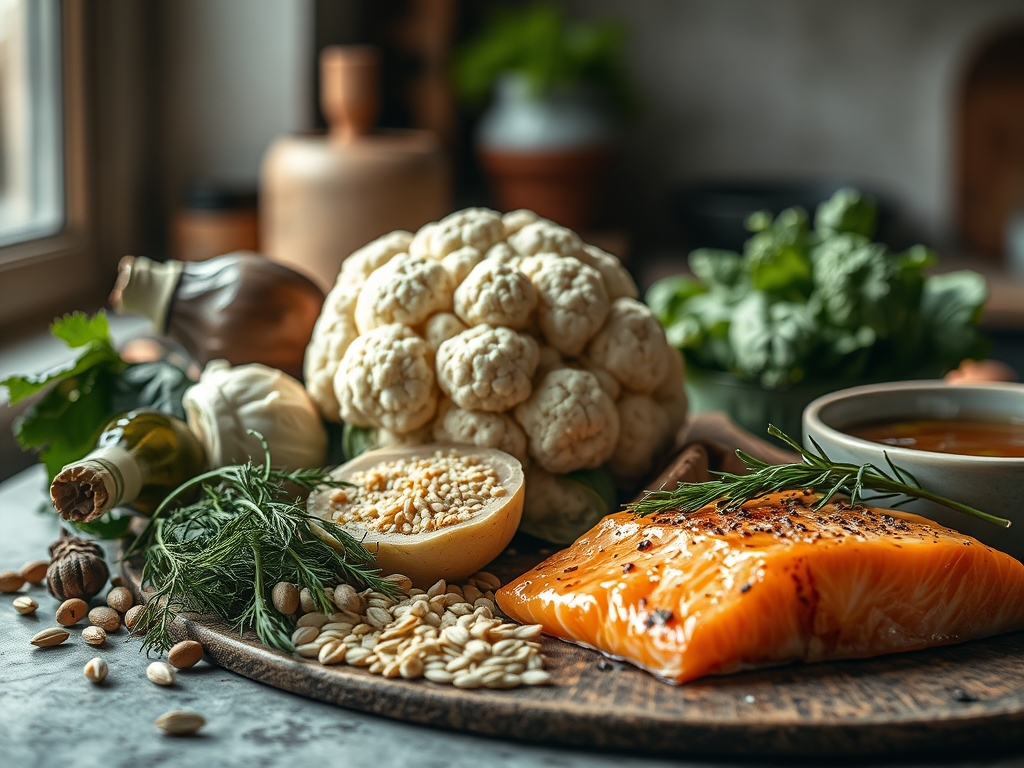
To execute these cauliflower and salmon recipes with precision, your mise-en-place must be impeccable. Start with the salmon; look for fillets with vibrant color and firm flesh that bounces back when pressed. You will need a digital scale to ensure even portioning, as consistent thickness leads to uniform cooking. For the cauliflower, choose heads that are dense and heavy with no dark oxidation spots.
Your pantry should include high-smoke point fats like avocado oil for searing and grass-fed butter for finishing. You will need coarse kosher salt to draw out moisture and fresh aromatics like thyme, garlic, and shallots. A microplane is essential for zesting citrus to provide that top-note acidity that cuts through the salmon's fat.
Smart Substitutions: If you cannot find fresh cauliflower, frozen riced cauliflower works beautifully for stir-fry applications, though you must dehydrate it in a dry pan first to avoid a mushy texture. If salmon is unavailable, Arctic Char offers a similar fat content and flavor profile. For a vegan twist on the "cauliflower side," swap butter for a rich tahini dressing to maintain that viscous mouthfeel.
The Clock:
Efficiency in the kitchen is all about the "Chef's Flow." For most cauliflower and salmon recipes, you are looking at a 15-minute prep window and a 20-minute cook time. The secret is overlapping your tasks. While your oven preheats to a blistering 425 degrees Fahrenheit, you should be breaking down your cauliflower into uniform florets. Smaller pieces mean more surface area for the Maillard reaction to occur.
Start the cauliflower first. It requires more time to soften its fibrous cellulose structure than the salmon does to reach its ideal internal temperature. While the vegetable roasts, use your bench scraper to clear your board and prepare the fish. This staggered approach ensures that the salmon finishes exactly as the cauliflower reaches its peak caramelization, preventing the fish from sitting and becoming dry.
The Masterclass:
1. Prep the Foundation
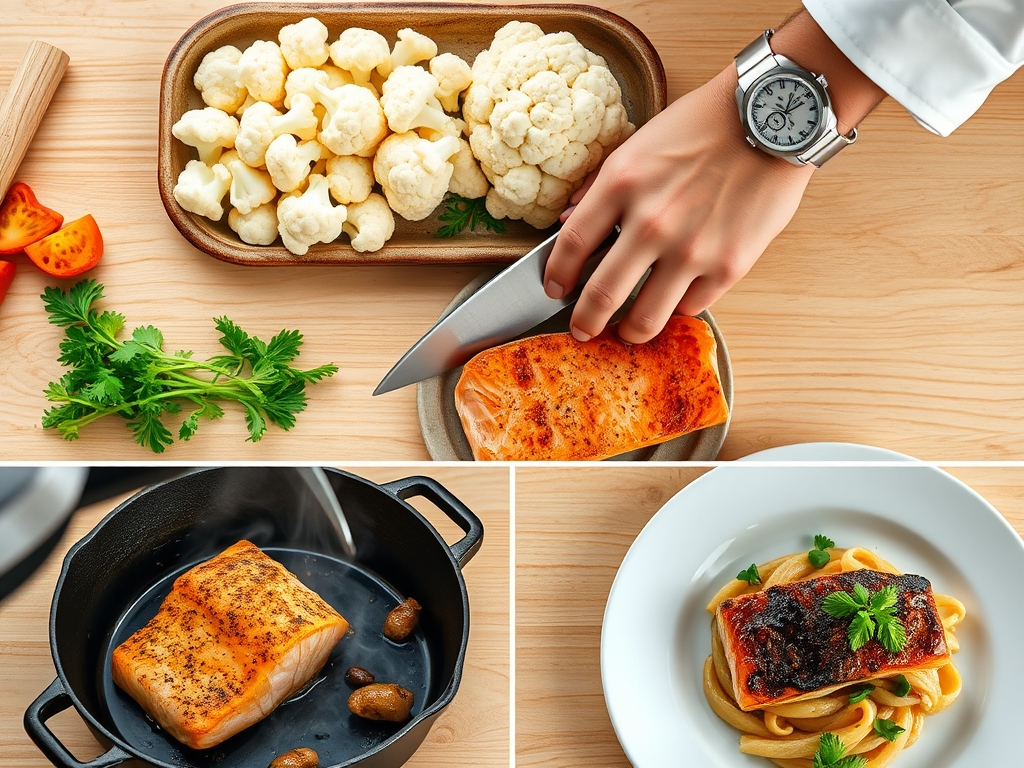
Break the cauliflower into bite-sized florets and toss them in a large bowl with oil and salt. Ensure every crevice is coated. This creates an even barrier for heat distribution.
Pro Tip: This is called increasing the surface-to-volume ratio. By cutting the cauliflower smaller, you allow more area for enzymatic browning, which creates those deep, nutty flavors that characterize a perfect roast.
2. The Initial Roast
Spread the florets on a preheated baking sheet. Do not crowd the pan. If the florets are too close, they will steam instead of roast, resulting in a limp texture.
Pro Tip: Preheating the sheet pan creates an immediate sear upon contact. This conductive heat transfer prevents the vegetable from absorbing too much oil and becoming greasy.
3. Sear the Salmon
Pat the salmon skin bone-dry with paper towels. Heat a heavy-bottomed skillet until the oil shimmers. Place the salmon skin-side down and press firmly with a flexible spatula for thirty seconds.
Pro Tip: Pressing the fish prevents the protein fibers from curling as they contract. This ensures maximum skin-to-pan contact, allowing the subcutaneous fat to render fully for a potato-chip-like crunch.
4. Infuse with Aromatics
Once the salmon is flipped, drop a knob of butter, smashed garlic, and thyme into the pan. Use a large spoon to baste the hot, flavored fat over the fish.
Pro Tip: Basting utilizes convection to cook the top of the fish gently while the butter solids undergo the Maillard reaction. This adds a toasted, savory depth known as beurre noisette.
5. Deglaze and Finish
Remove the fish and cauliflower. Add a splash of white wine or lemon juice to the salmon pan, scraping up the browned bits with a saucier whisk.
Pro Tip: This process is called deglazing. The acidity in the liquid dissolves the "fond" (the caramelized protein bits), creating a complex, emulsified pan sauce that ties the whole dish together.
The Deep Dive:
When we look at the macro nutrition of cauliflower and salmon recipes, we see a near-perfect balance. A standard serving provides roughly 35g of high-quality protein, 20g of healthy fats, and only 8g of net carbohydrates. It is a dream for those following Keto or Gluten-Free protocols.
Dietary Swaps: To make this vegan, replace the salmon with a thick "steak" of cauliflower and use a seaweed-infused oil to mimic the oceanic flavor. For a Paleo version, ensure your fats are strictly animal-based or derived from coconut or avocado.
The Fix-It:
- Soggy Skin: Your pan wasn't hot enough or the fish was damp. Fix: Start with a cold pan and gradually raise the heat to render the fat slowly, or ensure the skin is surgically dry.
- Bitter Cauliflower: This usually happens from over-roasting small bits. Fix: Toss the florets in a light honey or maple glaze to balance the bitterness with sweetness.
- Overcooked Salmon: If the white albumin starts oozing out, it is overdone. Fix: Pull the fish at 125 degrees Fahrenheit and let thermal carryover bring it to a perfect 135 degrees.
Meal Prep: To reheat without ruining the texture, avoid the microwave. Use a toaster oven at 300 degrees Fahrenheit. This gently warms the fats without vibrating the water molecules so violently that the protein becomes rubbery.
The Wrap-Up:
Mastering cauliflower and salmon recipes is like learning a new language where the vocabulary is flavor and the grammar is technique. You have moved beyond just "cooking dinner" into the realm of controlling molecular changes. By focusing on the sear of the skin and the caramelization of the floret, you are creating a restaurant-quality experience in your own kitchen. Now, grab your tongs, fire up that range, and let the chemistry do the heavy lifting. You've got this!
The Kitchen Table:
How do I keep the salmon from sticking?
Ensure your pan is properly seasoned or use a high-quality stainless steel skillet. Wait for the oil to reach its smoke point before adding the fish. Do not attempt to flip the salmon until it naturally releases from the surface.
Can I use frozen cauliflower for roasting?
Yes, but do not thaw it first. Toss the frozen florets directly in oil and roast at a higher temperature (450°F). This allows the moisture to evaporate quickly, preventing the cauliflower from becoming waterlogged or mushy during the cooking process.
What is the best way to flavor the cauliflower?
Beyond salt and pepper, use dry spices like smoked paprika, cumin, or turmeric. These fat-soluble spices bloom in the roasting oil, deeply infusing the florets with flavor. Finish with a squeeze of fresh lemon to brighten the earthy notes.
How do I know when the salmon is perfectly cooked?
Use a digital thermometer to check the thickest part of the fillet. Aim for 125°F for medium-rare or 135°F for medium. The flesh should be opaque and flake easily with a fork while remaining moist in the center.