
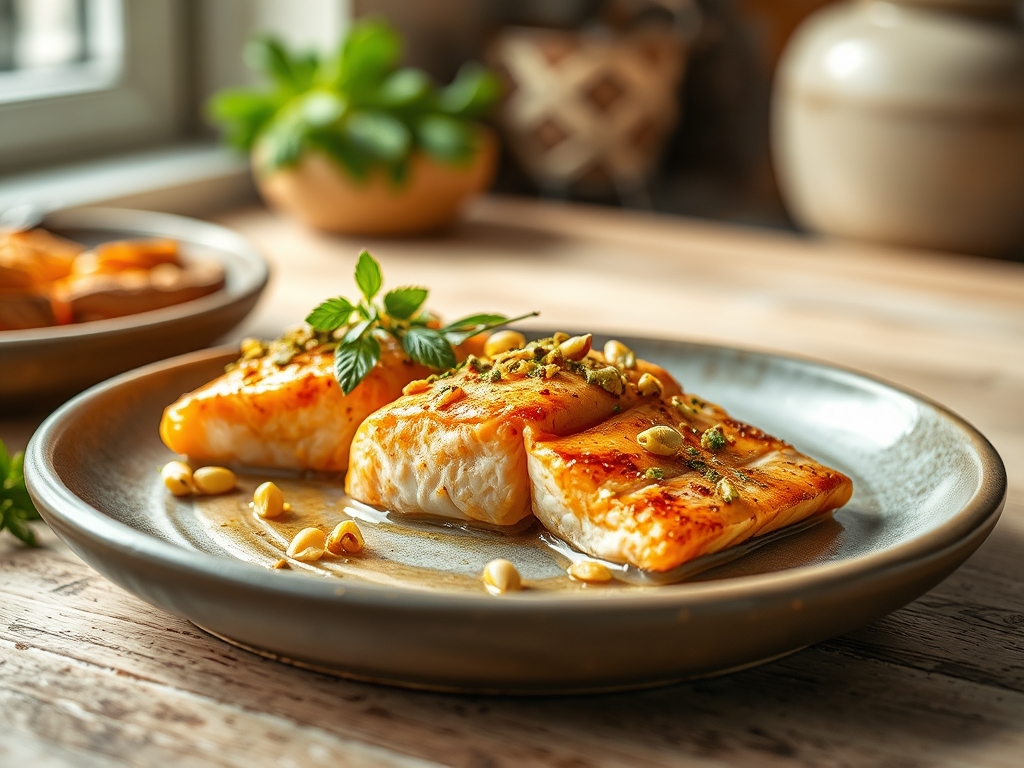
Imagine the sharp snap of a roasted nut meeting the buttery, velvet yielding of a perfectly medium-rare fish. That is the sensory promise of elite pistachio salmon recipes. It is a dish that feels like a black-tie gala but comes together with the frantic, joyful energy of a Tuesday night. We are moving beyond the soggy, grey fillets of the past. Today, we are mastering the art of the crust; a golden, emerald-flecked armor that protects the delicate proteins underneath while providing a structural contrast that makes every bite feel intentional. This is not just about dinner; it is about manipulating thermal energy and moisture content to create a restaurant-grade masterpiece in your own kitchen. We are going to harness the power of healthy fats and aromatic resins to transform a simple piece of seafood into a conversation piece. Grab your favorite apron and clear the counter. We are diving deep into the chemistry of the crunch, ensuring your kitchen smells like a high-end Mediterranean bistro within the next twenty minutes.
The Gathers:
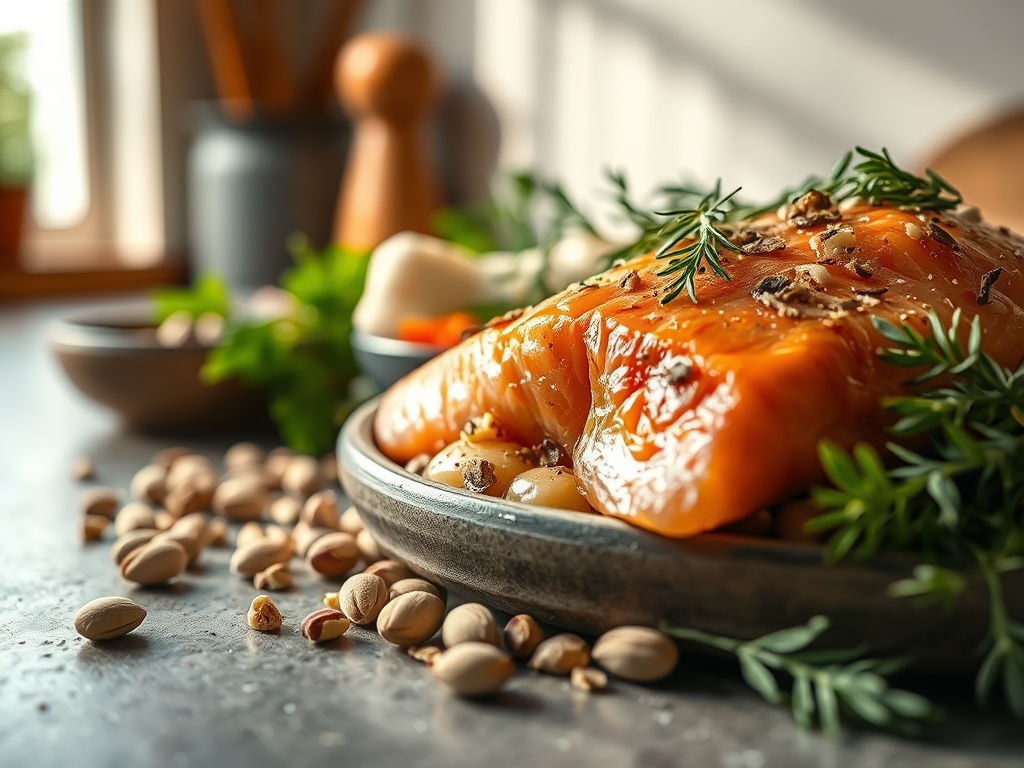
Mise-en-place is the difference between a panicked cook and a confident chef. For these pistachio salmon recipes, your primary specimen is the salmon itself. Look for Center-Cut Atlantic or King Salmon fillets. These provide a uniform thickness which is essential for even heat distribution. You will need high-quality, shelled pistachios; look for those with a vibrant green hue, as this indicates a higher concentration of chlorophyll and a fresher flavor profile.
To bind the crust, we utilize a viscous honey-mustard glaze. You will need Dijon mustard for its piquant acidity and a touch of clover honey to facilitate the Maillard reaction. For the aromatic lift, grab a fresh lemon; we will use a microplane to harvest the zest, releasing the essential oils trapped in the flavedo. Fresh dill and parsley provide a herbaceous counterpoint to the heavy lipids in the nuts.
Smart Substitutions: If you are avoiding nuts, toasted pumpkin seeds (pepitas) offer a similar crunch and earthy profile. For those who find salmon too oily, a firm white fish like Halibut or Cod can be substituted, though you must reduce the cooking time by approximately twenty percent to account for the lower fat content and different muscle fiber density.
The Clock
Efficiency in the kitchen is dictated by the Chef's Flow. This recipe requires a total of 25 minutes from fridge to table. Your active prep time is exactly 10 minutes. This includes the precision chopping of the nuts and the emulsification of the binder. The remaining 15 minutes are dedicated to the oven, where the thermal magic happens.
The "Flow" begins with preheating. Never place your fish in a cold oven; you need the immediate hit of 400 degrees Fahrenheit to set the crust before the internal fats begin to render too aggressively. While the oven stabilizes, you prep your crust. By the time your timer dings, you should be ready to slide the tray in. This prevents the salt in the rub from drawing out too much moisture, which would result in a steamed, rather than roasted, texture.
The Masterclass
1. The Desiccation Phase
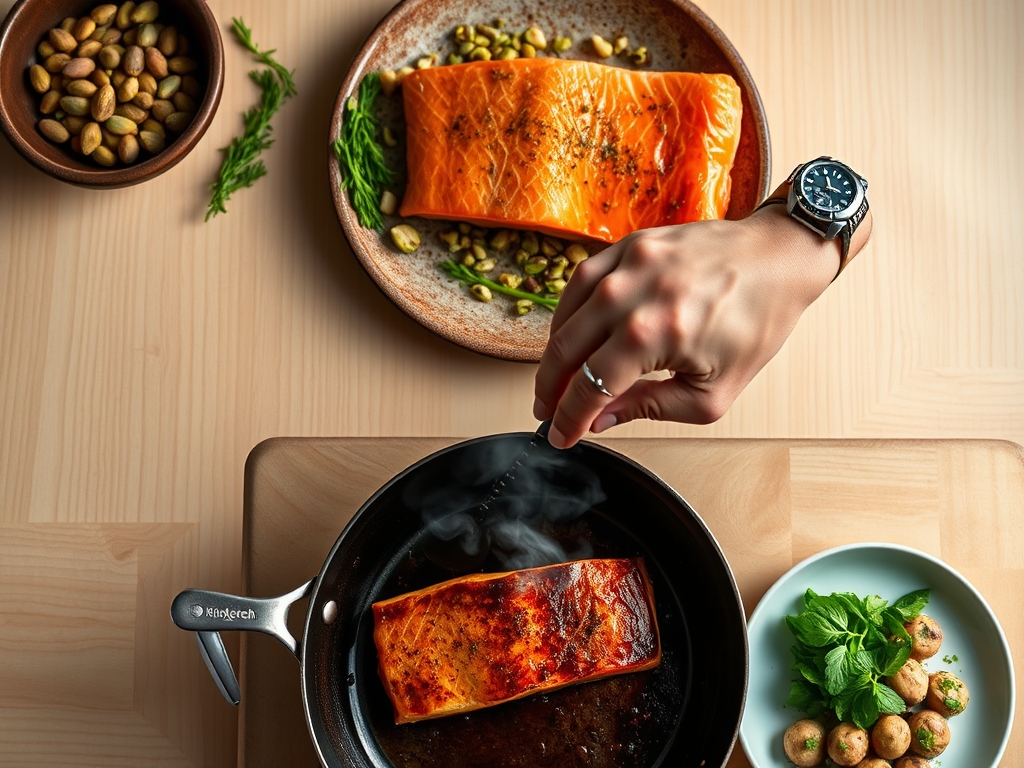
Before a single seasoning touches the fish, you must use a paper towel to pat the salmon bone-dry. Moisture is the enemy of the crust. If the surface is damp, the heat of the oven will go toward evaporating that water rather than browning the nuts.
Pro Tip: This is known as surface evaporation. By removing surface moisture, you ensure the binder adheres to the proteins rather than sliding off in a pool of steam.
2. Pulse for Texture
Place your pistachios in a food processor or use a heavy chef's knife to achieve a "rubble" consistency. You do not want a fine powder; you want varying particle sizes to create a complex mouthfeel.
Pro Tip: Use a bench scraper to gather your chopped nuts efficiently. A varied grind prevents the crust from becoming a dense paste, allowing hot air to circulate between the nut fragments.
3. The Emulsified Binder
In a small saucier or bowl, whisk together the Dijon, honey, and lemon zest. This creates a temporary emulsion. Brush a thin, even layer over the top of the salmon. This acts as the "glue" for your pistachio salmon recipes.
Pro Tip: The mustard contains lecithin, a natural emulsifier that bridges the gap between the watery juices of the fish and the fatty oils of the nuts.
4. The Press and Set
Dredge the top of the glazed salmon into your pistachio mix, pressing firmly with the palm of your hand. You want the nuts to be embedded into the glaze. Transfer the fillets to a parchment-lined sheet pan using offset tongs.
Pro Tip: Pressure increases the surface area contact between the binder and the nut, ensuring the crust stays intact during the protein denaturation process.
5. Precision Roasting
Slide the pan into the center rack of the oven. We are looking for an internal temperature of 135 degrees Fahrenheit for a perfect medium. The nuts will toast and release their volatile oils, infusing the top layer of the fish with a woody aroma.
Pro Tip: Utilize a digital probe thermometer. This accounts for thermal carryover, where the internal temperature will rise another 3 to 5 degrees after the fish is removed from the heat.
6. The Acidic Finish
Once out of the oven, let the fish rest for three minutes. Immediately before serving, hit it with a fresh squeeze of lemon juice. The acid cuts through the heavy fats of the salmon and the pistachios, brightening the entire flavor profile.
Pro Tip: This is a "Brightening Flash." The citric acid reacts with the fats to create a clean finish on the palate, preventing the dish from feeling overly "heavy."
The Deep Dive
From a nutritional standpoint, this dish is a powerhouse. You are getting a massive dose of Omega-3 fatty acids from the salmon, which are essential for brain health. The pistachios add fiber, potassium, and antioxidants like lutein.
Dietary Swaps: To make this Keto, swap the honey for a sugar-free maple syrup or simply increase the mustard ratio. For a Gluten-Free version, ensure your Dijon is certified GF. If you want a Vegan alternative, this crust works beautifully on a thick slab of roasted cauliflower or a firm block of pressed tofu.
The Fix-It:
- Soggy Bottoms: If the skin is flabby, start the salmon in a heavy-bottomed skillet skin-side down for 2 minutes before adding the crust and moving to the oven.
- Burnt Nuts: If the pistachios brown too fast, tent the fish loosely with foil. This reflects radiant heat while allowing the internal temperature to continue rising.
- Crust Falling Off: You likely applied the glaze too thickly. A thin, translucent layer is all you need for maximum adhesion.
Meal Prep Science: To reheat, avoid the microwave. The high-frequency waves will turn the salmon into rubber. Instead, use a toaster oven at 300 degrees. This gently re-activates the oils in the nuts, restoring the crunch without overcooking the delicate center.
The Wrap-Up
You have just mastered one of the most elegant pistachio salmon recipes in the culinary playbook. By understanding the relationship between moisture, heat, and emulsification, you have elevated a simple fillet into a textural marvel. Cooking is as much about physics as it is about flavor. When you serve this, take a moment to appreciate the vibrant green crust against the coral pink of the fish. It is a visual and technical triumph that proves you don't need a professional kitchen to produce professional results. Now, go pour a glass of crisp Sauvignon Blanc and enjoy the fruits of your scientific labor!
The Kitchen Table
Can I use frozen salmon for this recipe?
Yes, but you must thaw it completely in the refrigerator and pat it extremely dry. Frozen fish often releases more albumin (the white protein), so a thorough drying process is vital for a successful crust.
How do I know when the salmon is done without a thermometer?
Press the side of the fillet with a fork. If the flakes separate easily and the center is opaque rather than translucent, it is ready. However, a digital thermometer is the only way to guarantee precision.
Can I make the pistachio crust in advance?
Absolutely. You can chop the nuts and mix them with the herbs and zest up to two days in advance. Store the mixture in an airtight container in the fridge to keep the oils fresh.
Why is my pistachio crust not crunchy?
This usually happens if the oven temperature is too low or if the fish was too wet. Ensure your oven is fully preheated to 400 degrees to rapidly toast the nuts and evaporate surface moisture.